CHONK DIRECTORY · Indoor plant care · Guide 7 of 9
Choose a grow light
Match the beam to the plant space, compare measured output, then install and time it safely.
Picture guide · three scenes
Light the canopy, not the label.
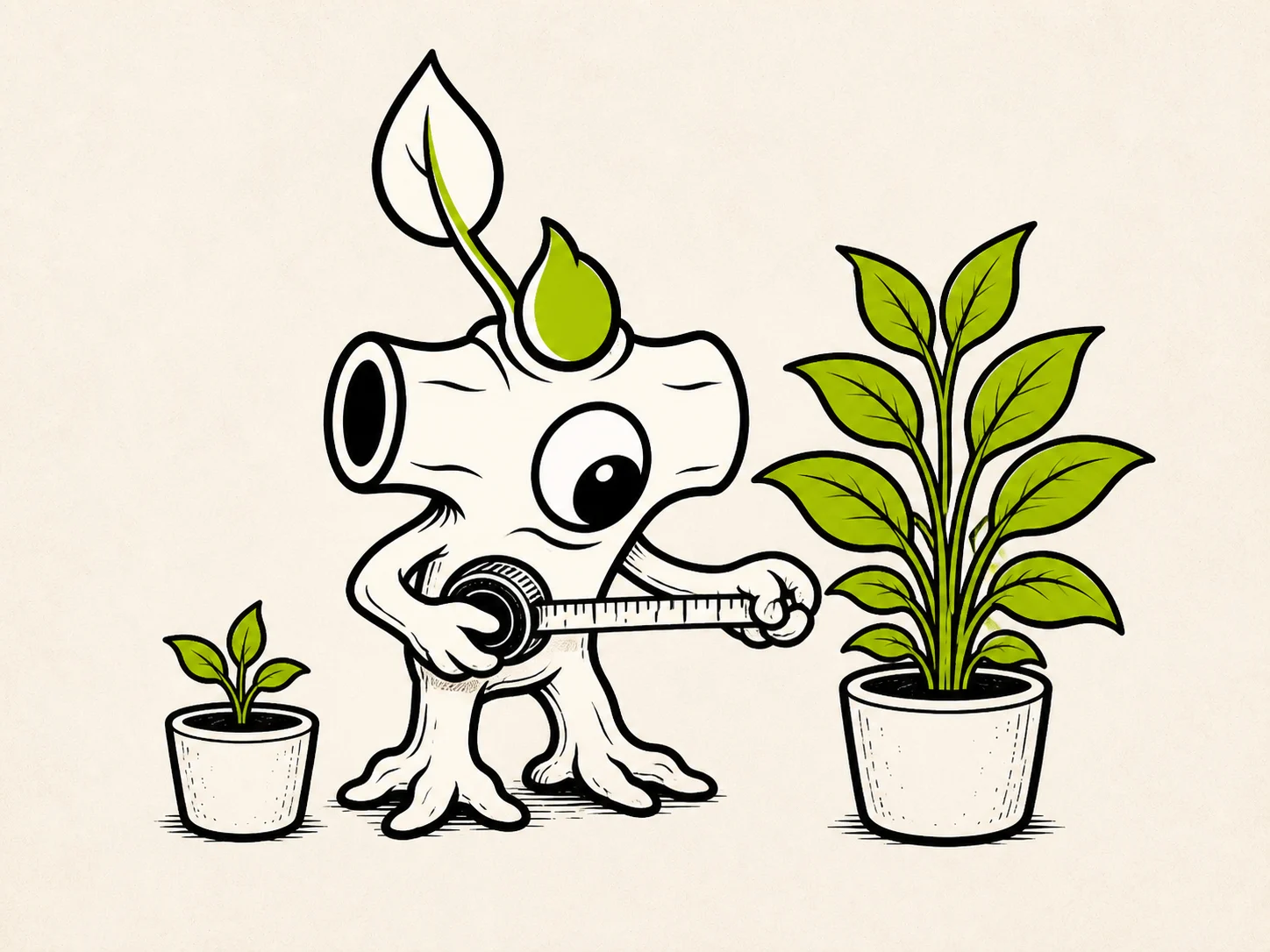
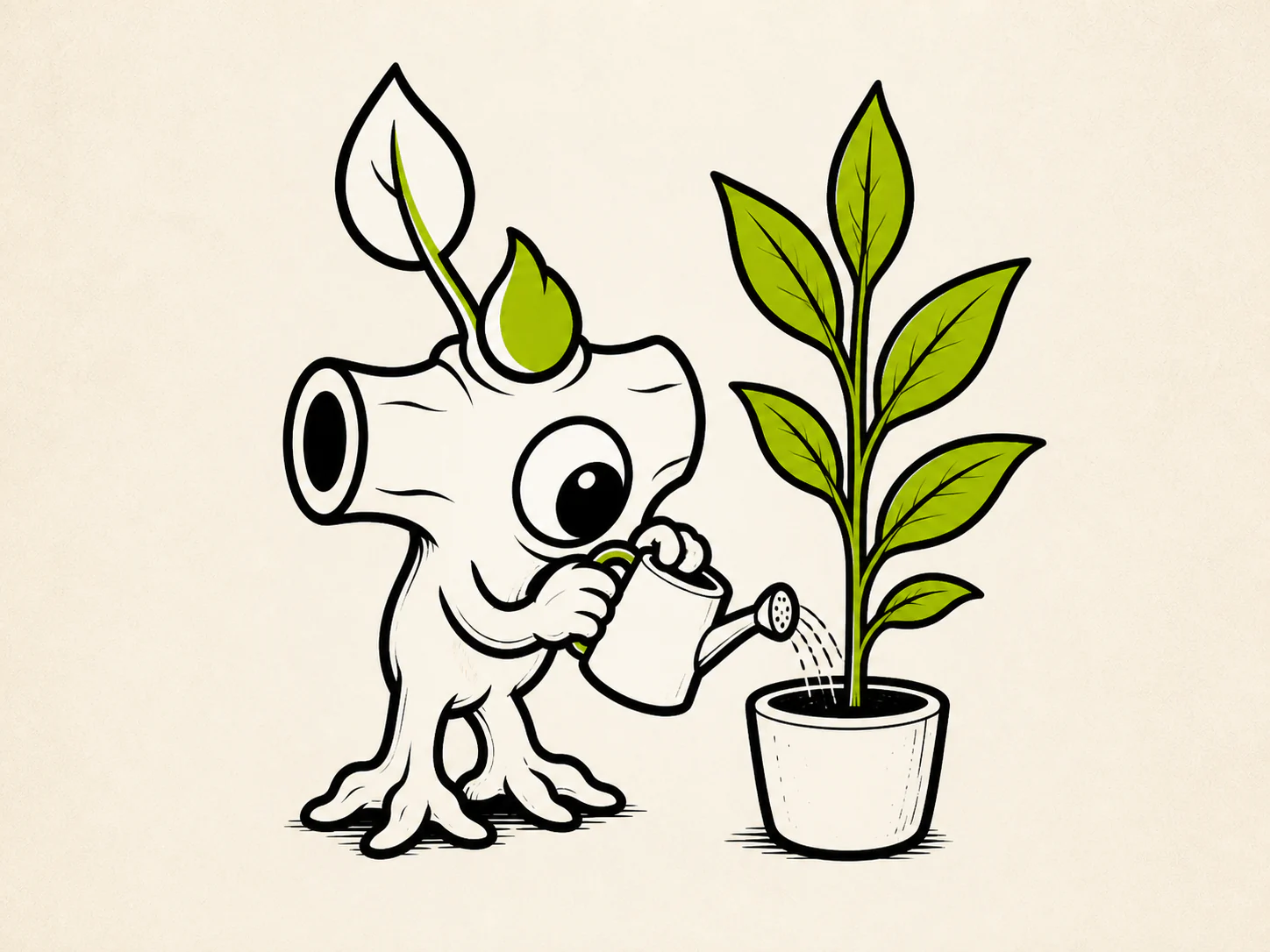
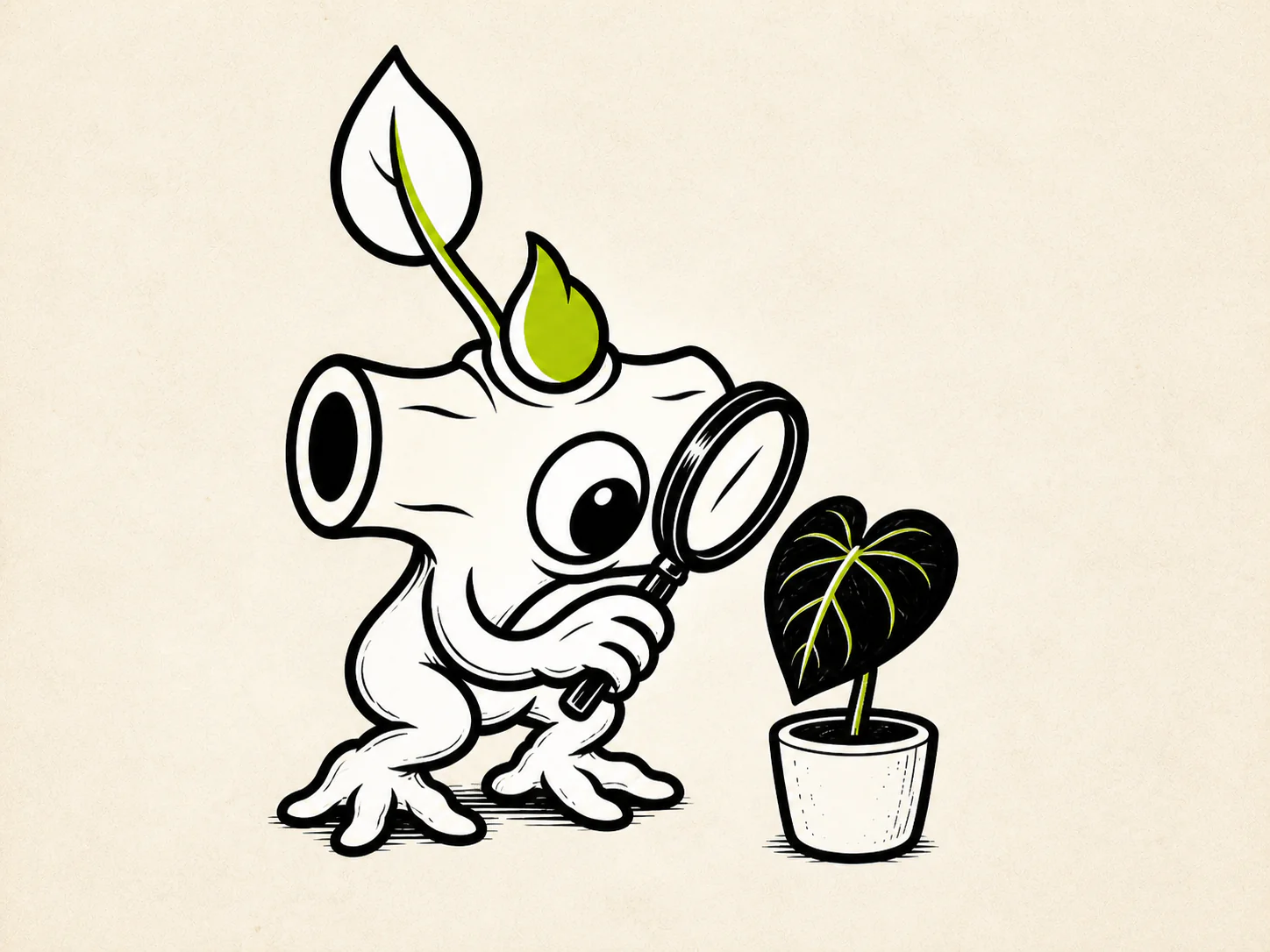
Check daylight first, match the beam to the plant space, then compare measured output and install safely.
Open the full grow-light checklist
01
Start with the plant and the footprint
A healthy plant making well-shaped new leaves beside a bright window may already have enough light. Add a lamp for darker rooms, shelves, windowless positions or short winter days, then match its beam to the canopy: a bulb for one plant or compact group, a linear bar for a shelf and a panel for a dedicated area.[1][2][3]
- Possible low-light signs include stretched growth, progressively smaller leaves, leaning, weaker flowering and loss of colour or variegation in some cultivars.
- Pale, bleached or scorched leaves can signal too much light. Roots, watering, pests and nutrition can cause similar symptoms, so check the whole plant.
- Light needs vary within broad groups such as ferns, Anthurium, Philodendron and Hoya. Use the exact species or cultivar and the growth you want as your guide.
- “Full spectrum” describes the mix of wavelengths; it does not prove useful intensity or even coverage.
02
Read useful numbers, not equivalent watts
Ignore claims such as “400 W equivalent”. Actual watts describe electricity consumed; PPF describes total photosynthetic output; PPFD describes the useful light reaching the canopy; and DLI adds that light up across the day. Compare PPFD maps only at the same height, footprint and dimmer setting—a bright centre reading does not describe the edges.[2][4][6]
- Look first for actual input power, then PPF and a PPFD map measured at a stated distance.
- A wider plant or shelf needs even coverage, not only a high number directly below the centre of the lamp.
- Distance changes intensity quickly. A 36 W bulb and a 100 W panel at the same height are not equivalent.
- Dimming gives a panel useful headroom, but only if you record the height and setting when comparing results.
03
Set the timer, distance and safety
For general foliage plants, 12–14 hours of supplemental light is a sensible starting point; do not normally exceed 16 hours of total light a day. Begin at the maker’s stated distance, introduce stronger light gradually and watch the next leaves. Change one thing at a time so you know what worked.[2][3][9][10][4]
- Use a timer and keep a consistent light-and-dark schedule; flowering plants may need a crop-specific photoperiod.
- Buy the exact UK-market version. Check the rating plate, UK voltage and frequency, fused three-pin plug, mounting hardware and permitted link count.
- Secure overhead lights mechanically. Keep plugs, drivers, timers and connectors dry and above watering level, and unplug before fitting, cleaning or adjusting.
- For a heavy bulb such as the SANSI 36 W, use an open E27 fitting rated for its power, size and roughly 0.45 kg weight; do not use a tightly enclosed shade.
- Second-hand: ask for the exact model and age, test every LED and dimmer, and inspect the plug, cable, driver, heat sink and mounting parts. Check whether any warranty transfers.
Explore the plants
Plant Index entries connected to this guide:
Bulb, bar or panel
Three grow-light setups to compare
Selected from current published specifications and UK availability for different jobs. Chonk has not laboratory-tested these lights. This is an unranked comparison, not an endorsement; verify the exact model, plug, voltage, output data, stock and warranty before buying.
- SANSI BR30 36 W E27One plant or compact group · published PPF and centre PPFD · needs a strong, open fittingView exact specification ↗
- SunBlaster 60 cm 16 W LEDShelf or propagation · 230 V and linkable · output is stated in lumens, not a PPFD mapView UK listing ↗
- Spider Farmer SF1000Dedicated area · 2026 100 W dimmable panel · read the tiered, non-transferable warranty termsView UK specification ↗
- Second-hand grow lightsSearch Chonk, then verify the exact model, plug, cable, driver, dimmer and mounting kitSearch Chonk Market →
Evidence used (10 sources)
- 1Artificial lighting for indoor plants ↗Royal Horticultural Society
- 2Important considerations for supplemental light ↗Iowa State University Extension and Outreach
- 3Lighting for indoor plants ↗University of Maryland Extension
- 4
- 5SunBlaster propagation LED specifications ↗GroWell Horticulture
- 62026 SF1000 LED grow-light specifications ↗Spider Farmer UK
- 7Warranty and service terms ↗Spider Farmer UK
- 8
- 9Maintaining portable and transportable electrical equipment ↗Health and Safety Executive
- 10Electrical safety in the garden ↗Electrical Safety First