CHONK DIRECTORY · Indoor plant care · Guide 2 of 9
Choose plant size and maturity
Choose a healthy plant whose arrival size, likely future spread and delivery route all fit your home.
Picture guide · three scenes
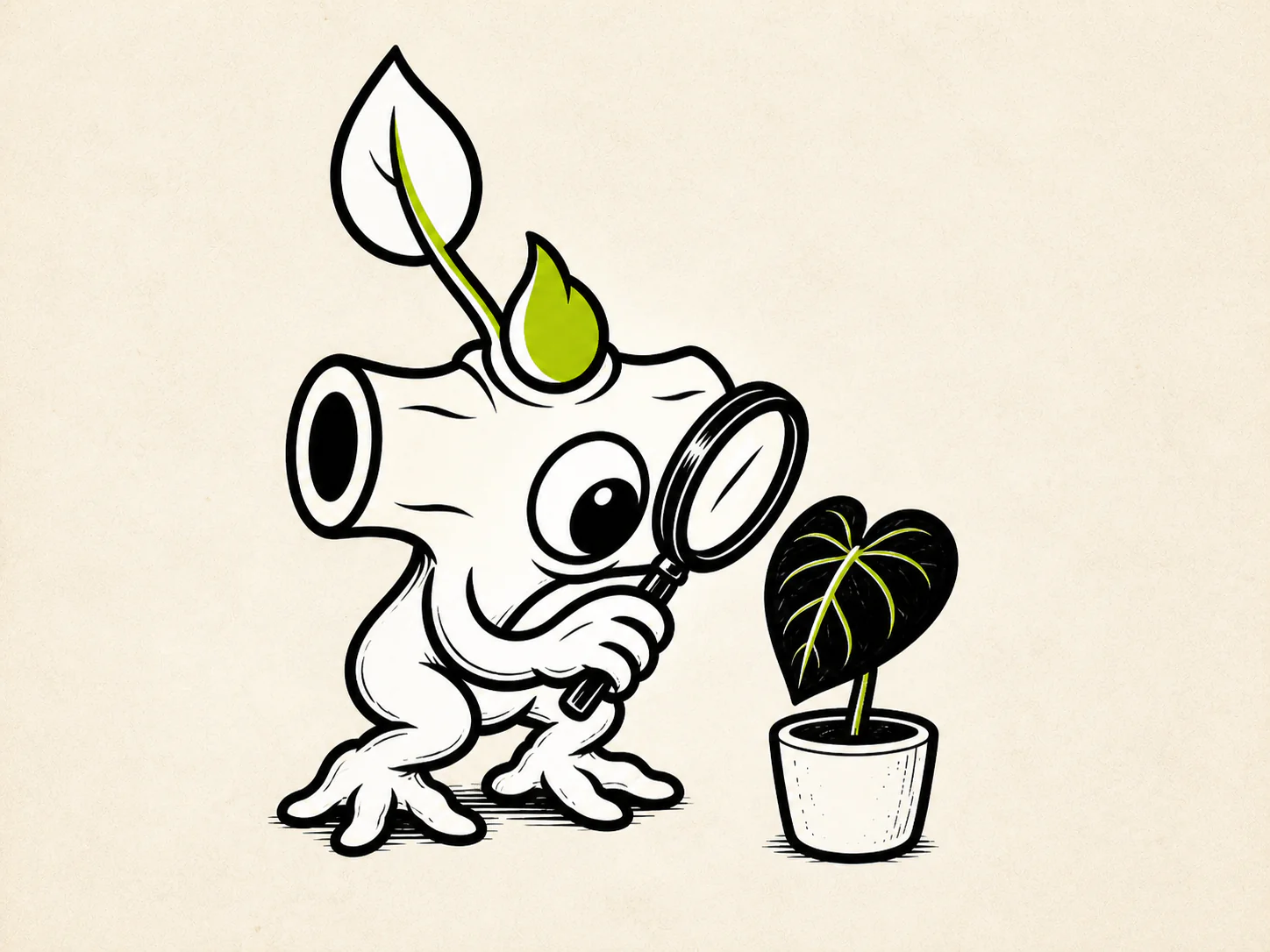
Size now. Space later.
Plan the future fit, separate size from maturity, then decode the seller’s measurements before delivery.
Open the full size checklist
01
Check the future fit
Use the botanical name, including any named cultivar, to check growth habit, future height, spread and time-to-size in indoor or under-glass conditions. Treat figures as planning ranges, not guarantees. Measure the intended position at floor and leaf level, then check doors, stairs and lifts.[1][2][8]
02
Separate size, maturity and health
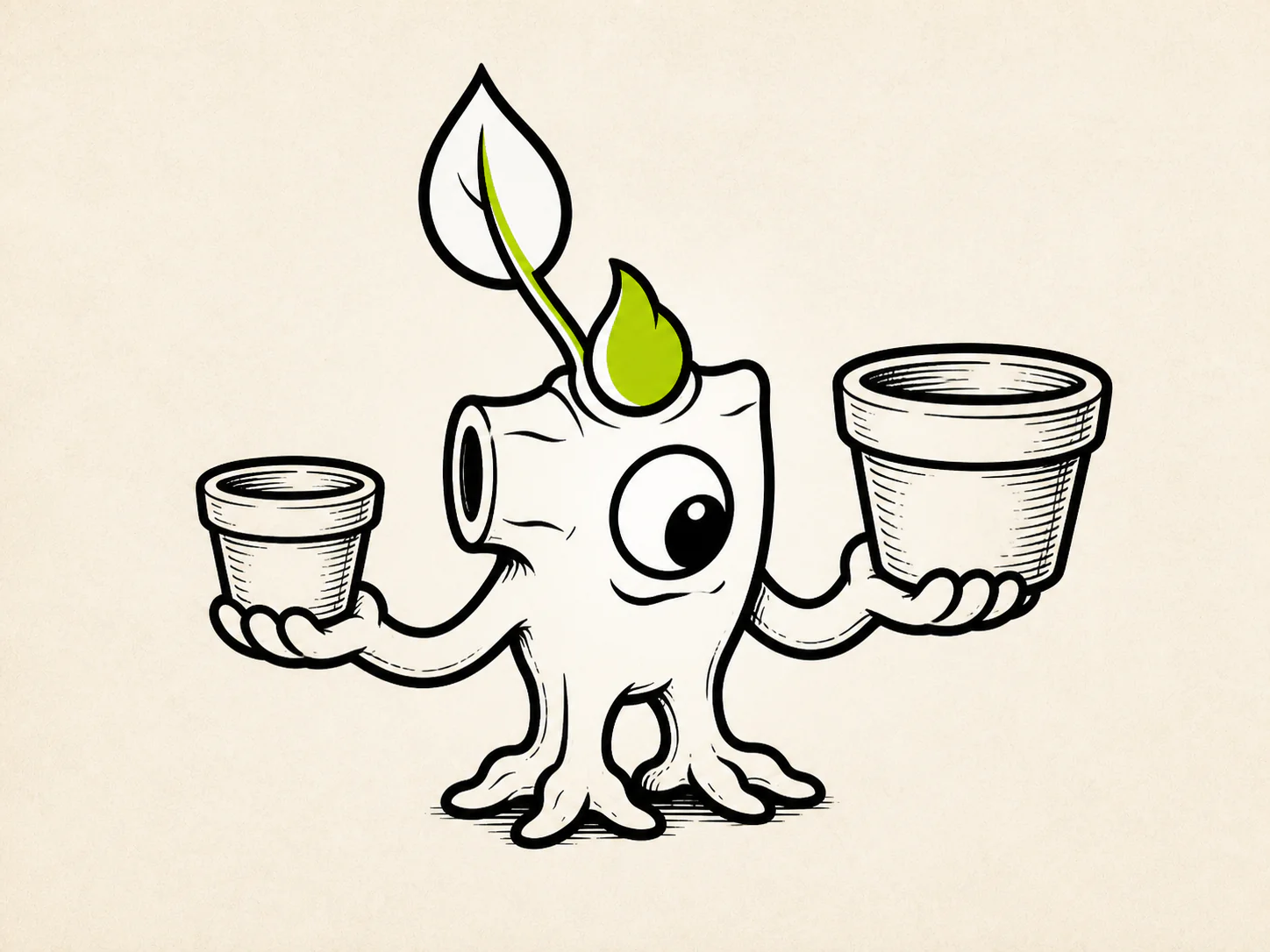
Current size, developmental maturity and health are different things. A compact plant can be mature; a large plant can still be juvenile. Bigger is not automatically healthier.[3][4][5][6][9]
- Smaller: may cost less within the same listing and is easier to carry and place, but gives less immediate visual impact. If its container is small for the plant, watering may be needed more often.
- Mid-sized: can balance presence and handling, but “medium” has no universal dimensions.
- Larger: gives immediate scale and needs more clearance and lifting effort; all else equal, it uses more water. Care difficulty still depends on the plant and conditions.
- Any size: choose balanced growth, healthy colour, intact shoots, no visible pests and healthy roots without severe congestion.
03
Ask what the measurements mean
S / M / L are seller labels, not shared standards. Confirm the current plant’s height and width, whether height includes the nursery pot, the nursery-pot diameter, any support or pole, and whether the photograph is exact or representative. Compare those arrival measurements with the botanical name and likely future size.[1][9][10][11][12]
Explore the plants
Plant Index entries connected to this guide:
Where to buy or compare
Useful UK routes
Use these as starting points, then check current stock, specifications, delivery and returns.
- GrowTropicalsBaby-to-XL ranges organised by nursery-pot sizeView in Chonk →
- Conservatory ArchivesLondon-store stock; exact-specimen images on requestView in Chonk →
- Patch PlantsHeight and nursery-pot size shown on product pagesView in Chonk →
- Beards & DaisiesIndoor range with a published plant-size guideView in Chonk →
Evidence used (12 sources)
- 1Find a plant ↗Royal Horticultural Society
- 2Swiss cheese plants ↗Royal Horticultural Society
- 3How plants age ↗Royal Horticultural Society
- 4Product regulations and specifications ↗Royal FloraHolland
- 5How to choose healthy plants ↗Royal Horticultural Society
- 6Growing Indoor Plants with Success ↗University of Georgia Cooperative Extension
- 7How to repot a plant ↗Royal Horticultural Society
- 8Plant Hire Stock ↗Conservatory Archives
- 9Pachira Aquatica | Money Tree | GrowTropicals ↗GrowTropicals
- 10Plant Size Guide ↗Beards & Daisies
- 11
- 12Refund policy ↗Conservatory Archives