CHONK DIRECTORY · Indoor plant care · Guide 4 of 9
Choose an indoor plant pot
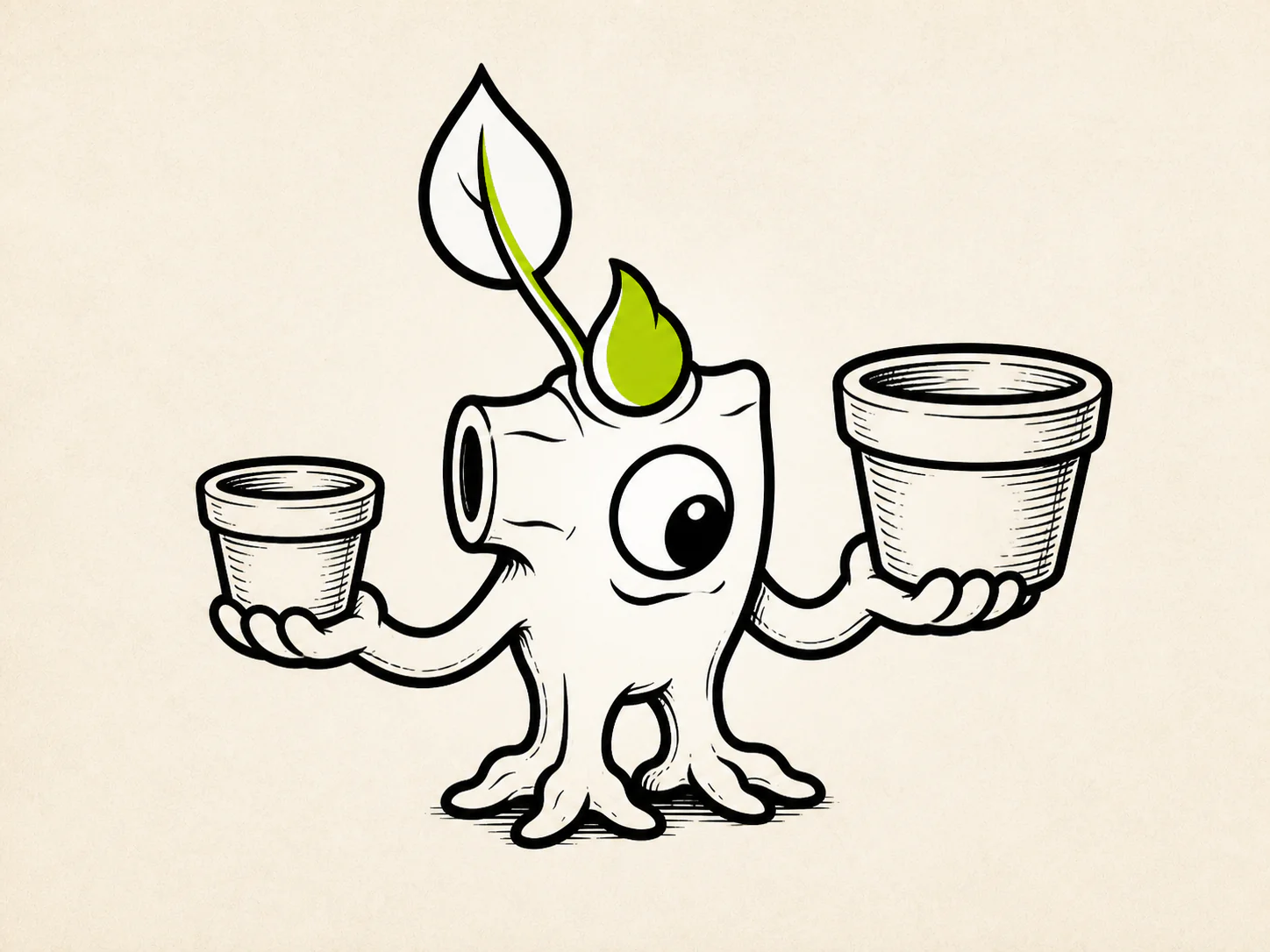
A draining inner pot is the dependable default. A decorative outer pot can provide the look.
Picture guide · three scenes
Roots first. Decoration second.
Start with a drainage exit, match material to your watering, then repot only one modest step up.
Scene 3
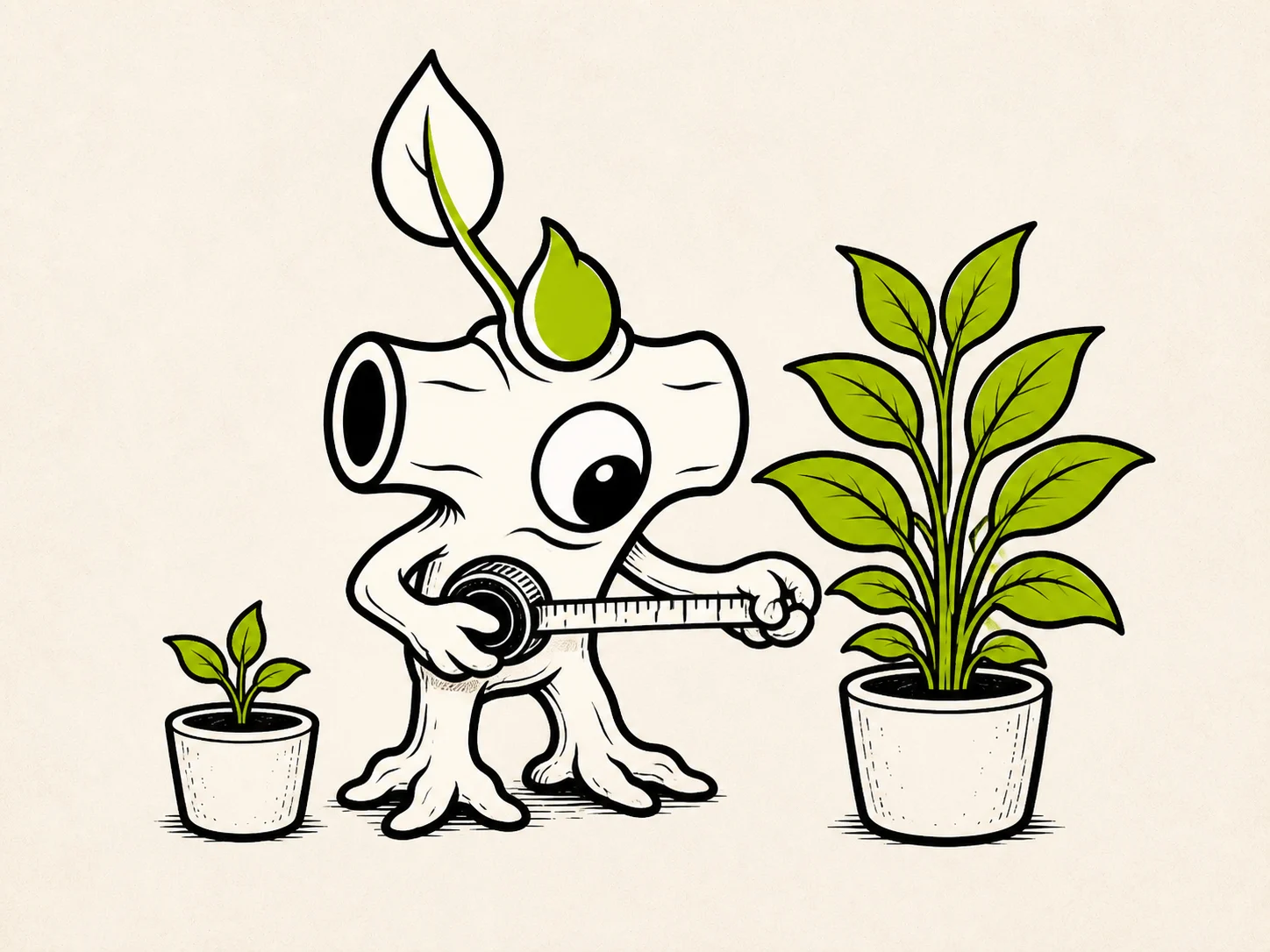
One size up, not five
Repot only after roots fill the container, choosing one modest step up; oversized pots leave more unused mix wet.[3]
- Check roots first
- One small step
- Avoid excess wet mix
Open the full pot checklist
01
Drainage first
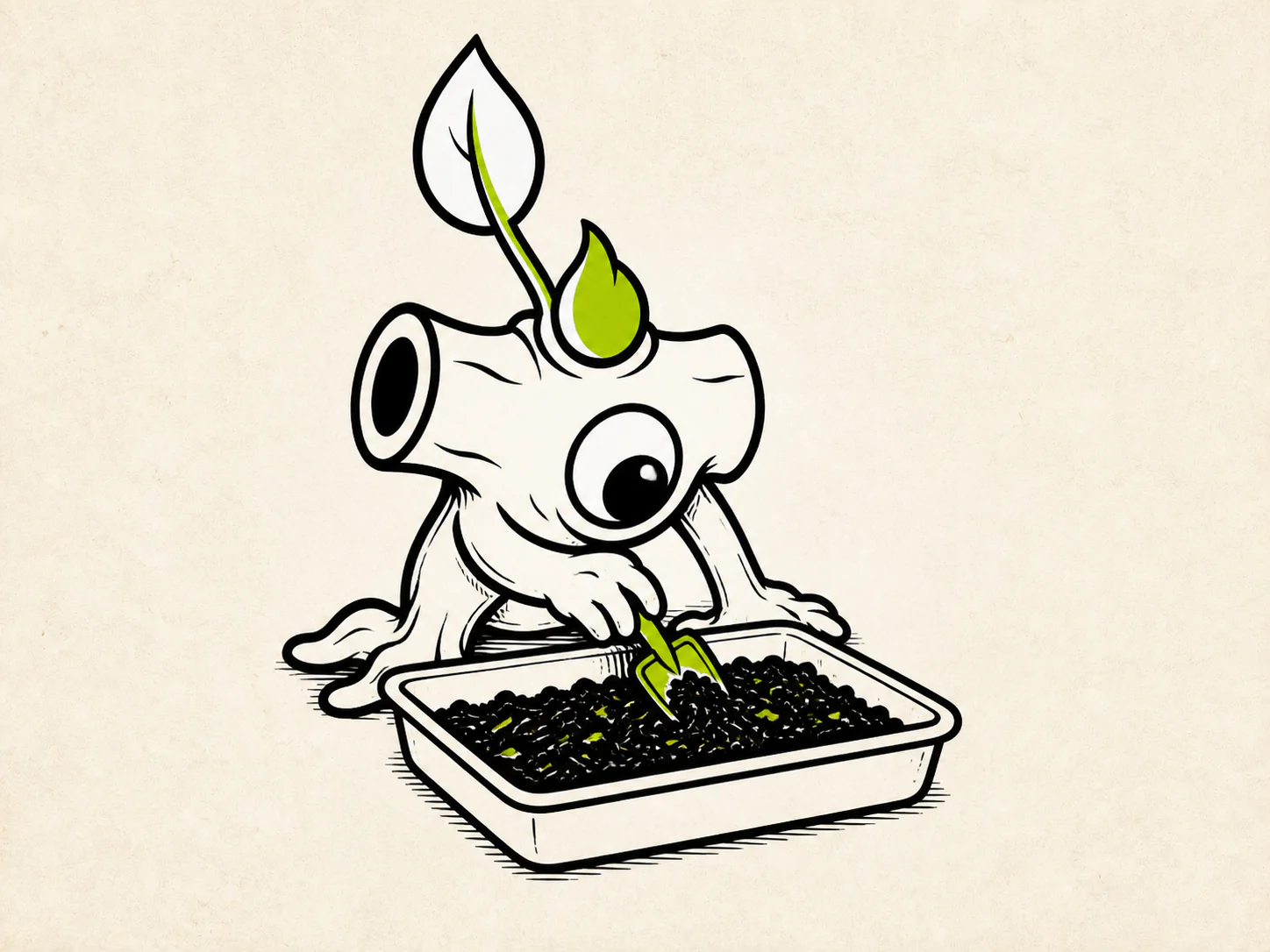
Drainage holes let excess water leave the root zone. If a decorative cachepot has none, keep the plant in a draining inner pot. Remove it to water, let it finish draining, empty the cachepot, then replace it.[2][1]
02
Match the material to your watering
Changing pot material changes how quickly the root zone dries.[1][4]
- Plastic nursery pot: light, inexpensive and slower to dry.
- Unglazed terracotta: porous and faster to dry; it can suit plants that prefer a quicker-drying root zone, but can disadvantage moisture-loving plants.
- Decorative cachepot: gives the look, while a draining inner pot does the growing.
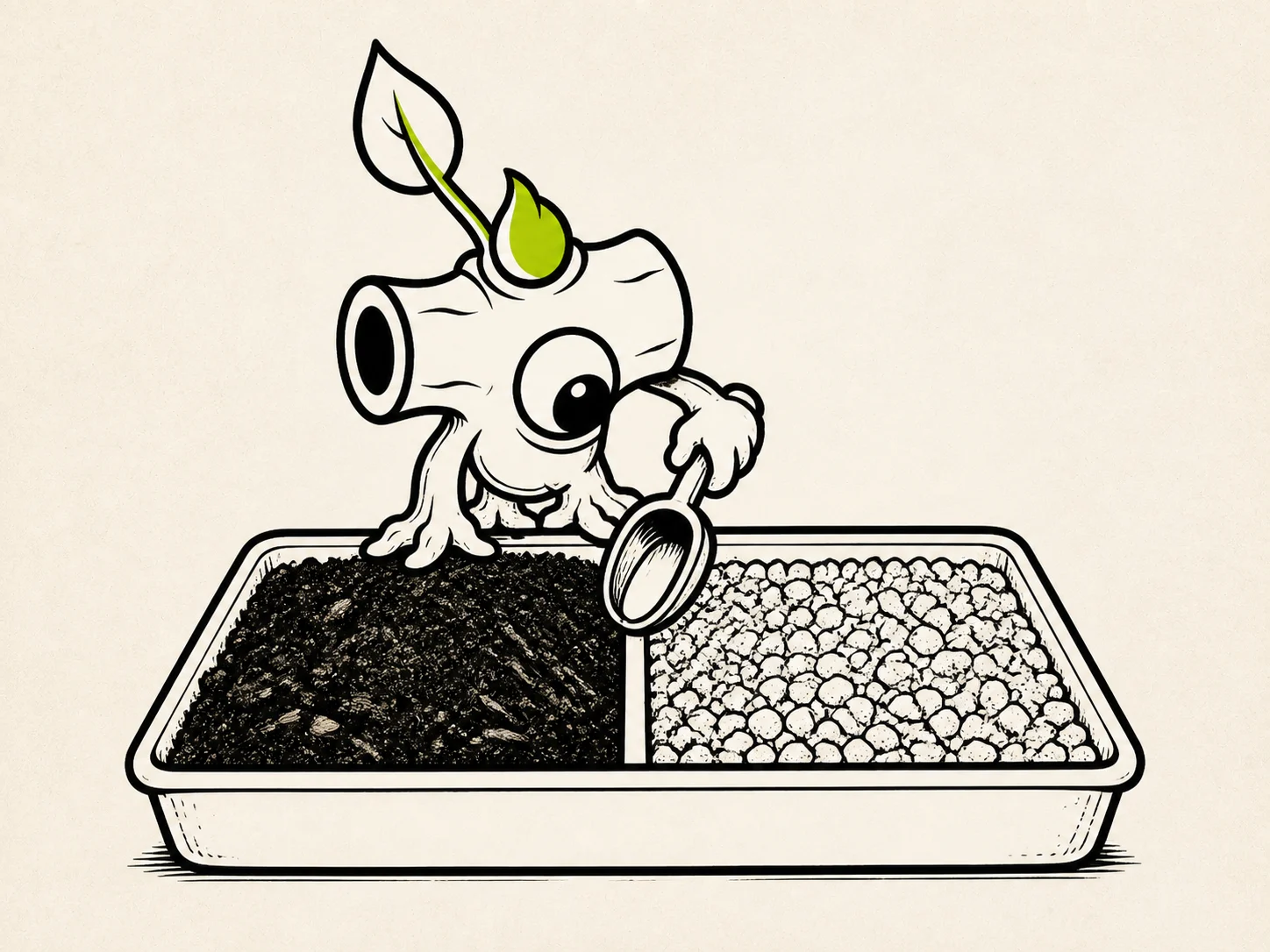
- Reservoir-and-wick pot: keeps the mix more evenly moist. It suits many houseplants, but not plants that prefer to dry between waterings; follow the planter instructions and monitor the mix after switching.
03
Move up one size, not five
When roots have filled the current container, choose one no more than one-third larger overall; below 25 cm, roughly 2.5–5 cm wider and deeper. Oversized pots keep more unused mix wet.[3]
Makers and retail ranges
Where to compare pot types
These are places to compare nursery, terracotta, cachepot and self-watering options—not a claim that one pot or seller is universally best.
Evidence used (4 sources)
- 1Growing plants in containers ↗Royal Horticultural Society
- 2How to select quality plant containers ↗Iowa State University Extension
- 3How to repot a plant ↗Royal Horticultural Society
- 4Properly watering container houseplants ↗Virginia Cooperative Extension